Claire Pamment, Head of Department of Theatre at NCA talks about the work being done by the department.
Showing posts with label Claire Pamment. Show all posts
Showing posts with label Claire Pamment. Show all posts
Sunday, August 8, 2010

NCA theatre sails through ice and fire
Article originally published in DAWN, Wednesday, 16 Jun, 2010
Claire Pamment though British, is no relative of the elder Kipling, who, as first principal in 1875 of the newly founded Mayo School of Industrial Art, now the National College of Arts, not only played a formative role in building and expanding the institution but also saving local arts and crafts from dying as a result of the glut of machine-made goods from England. Pamment has also been doing the same thing since taking over charge of the newly launched theatre department of NCA, which she is trying to build as the country’s first recognised academic discipline in performing arts while trying to save traditional entertainers like bhands, doms, behroopias, natak and nautanki from the onslaught of modern mechanised mass amusements.
Despite covert disdain of the high brow cultural officialdom towards this latter business and their oversensitivity to the menacing snarls of the growing lobby of philistines that shows in institutional skittishness and tightening of the grip on fund availability, Pamment has managed to push through her ambitious programmes and NCA would be opening its four-year degree course this summer with faculty comprising eminent academics and practitioners from Pakistan and abroad. The theatre department indeed is a bold and important step for NCA and a leap forward for the Mayo School of yore.
The theatre department started with Desi Natak, an international conference and performance forum, which brought families from folk theatre and international academics together for dialogue that set important precedents for the theatre curriculum, exploring linkages with world theatre trends through indigenous performance and opening up fresh avenues for stagecraft. Inputs from scholars like the Bangladeshi academic Jamil Ahmed on South Asian performance and Islam, on Asian puppetry from the American Kathy Foley, on reinterpretation of Natyashastra dramaturgies from UK Tara Theatre’s Jatinder Verma, on early Urdu stage from Russia’s Anna Suvorova and local practitioners from all over the country. The NCA’s playwriting diploma that resulted in graduates pursuing internships in Germany was in collaboration with the International Theatre Institute. Eminent dramatists including Girish Kanard, Kamal Ahmad Rizvi, Enver Sajjad and Mahesh Elkunchwar among others mentored the students.
Initiatives like ‘Open Act’ and ‘Spotlight’ made the young Rawalpindi campus of NCA a vibrant meeting point of theatre enthusiasts featuring amateur performances and dialogue with eminent local artistes. Unfortunately, these evening events, short courses, workshops were curtailed and had ultimately to be stopped for fear of arousing hostility of the bigots and creating risky situations. The theatre department has since been struggling to create some functional space for itself in the confines of prevailing limitations.
There is a way there for grit and tenacity. Claire Pamment is spending long sultry hours rehearsing her department’s inaugural production of Italian dramatist Dario Fo’s Can’t Pay, Won’t Pay –a riotous farce, featuring working class women who stage a hilarious bluff to ward off domestic drudgery and the price hike, duping their blundering men folk and police in their tracks. Adapted to contemporary Pakistan by Sarmad Sehbai’s deft imaginative pen, the play unfolds the drama of a society in conflict with itself.
Nobel laureate Dario Fo’s drama sparkles with the incisive social criticism that is also typical of our own legendary jesters Nasruddin, Mulla Dopiaza and Birbal. Pamment thinks Fo is the world’s most performed living playwright, not just because of his themes but his modes of performance, which celebrate comic defiance of oppression through the liberating power of laughter.
Thanks to the support of Italian embassy in Islamabad, Dario Fo’s protégé, the actor Mario Pirovano, who has worked with the master since 1983 and earned his admiration as a great story teller, will be in Pakistan holding workshops, performing dramatic readings from Fo’s work and engaging in dialogue with local actors as part of the theatre event that is scheduled to be staged at PNCA from July 29. NCA will be staging a curtain raiser for Can’t Pay Won’t Pay on July 3.

Claire Pamment though British, is no relative of the elder Kipling, who, as first principal in 1875 of the newly founded Mayo School of Industrial Art, now the National College of Arts, not only played a formative role in building and expanding the institution but also saving local arts and crafts from dying as a result of the glut of machine-made goods from England. Pamment has also been doing the same thing since taking over charge of the newly launched theatre department of NCA, which she is trying to build as the country’s first recognised academic discipline in performing arts while trying to save traditional entertainers like bhands, doms, behroopias, natak and nautanki from the onslaught of modern mechanised mass amusements.
Despite covert disdain of the high brow cultural officialdom towards this latter business and their oversensitivity to the menacing snarls of the growing lobby of philistines that shows in institutional skittishness and tightening of the grip on fund availability, Pamment has managed to push through her ambitious programmes and NCA would be opening its four-year degree course this summer with faculty comprising eminent academics and practitioners from Pakistan and abroad. The theatre department indeed is a bold and important step for NCA and a leap forward for the Mayo School of yore.
The theatre department started with Desi Natak, an international conference and performance forum, which brought families from folk theatre and international academics together for dialogue that set important precedents for the theatre curriculum, exploring linkages with world theatre trends through indigenous performance and opening up fresh avenues for stagecraft. Inputs from scholars like the Bangladeshi academic Jamil Ahmed on South Asian performance and Islam, on Asian puppetry from the American Kathy Foley, on reinterpretation of Natyashastra dramaturgies from UK Tara Theatre’s Jatinder Verma, on early Urdu stage from Russia’s Anna Suvorova and local practitioners from all over the country. The NCA’s playwriting diploma that resulted in graduates pursuing internships in Germany was in collaboration with the International Theatre Institute. Eminent dramatists including Girish Kanard, Kamal Ahmad Rizvi, Enver Sajjad and Mahesh Elkunchwar among others mentored the students.
Initiatives like ‘Open Act’ and ‘Spotlight’ made the young Rawalpindi campus of NCA a vibrant meeting point of theatre enthusiasts featuring amateur performances and dialogue with eminent local artistes. Unfortunately, these evening events, short courses, workshops were curtailed and had ultimately to be stopped for fear of arousing hostility of the bigots and creating risky situations. The theatre department has since been struggling to create some functional space for itself in the confines of prevailing limitations.
There is a way there for grit and tenacity. Claire Pamment is spending long sultry hours rehearsing her department’s inaugural production of Italian dramatist Dario Fo’s Can’t Pay, Won’t Pay –a riotous farce, featuring working class women who stage a hilarious bluff to ward off domestic drudgery and the price hike, duping their blundering men folk and police in their tracks. Adapted to contemporary Pakistan by Sarmad Sehbai’s deft imaginative pen, the play unfolds the drama of a society in conflict with itself.
Nobel laureate Dario Fo’s drama sparkles with the incisive social criticism that is also typical of our own legendary jesters Nasruddin, Mulla Dopiaza and Birbal. Pamment thinks Fo is the world’s most performed living playwright, not just because of his themes but his modes of performance, which celebrate comic defiance of oppression through the liberating power of laughter.
Thanks to the support of Italian embassy in Islamabad, Dario Fo’s protégé, the actor Mario Pirovano, who has worked with the master since 1983 and earned his admiration as a great story teller, will be in Pakistan holding workshops, performing dramatic readings from Fo’s work and engaging in dialogue with local actors as part of the theatre event that is scheduled to be staged at PNCA from July 29. NCA will be staging a curtain raiser for Can’t Pay Won’t Pay on July 3.

Desi Natak at NCA Department of Theatre Rawalpindi
Originally printed in The News, 24th February 2007
RAWALPINDI: Feb 24: The National College of Arts (NCA), Rawalpindi campus, will launch a four-day festival - Desi Natak - on March 22 to mark the opening of its theatre department. Speaking at a press briefing on Saturday, the festival director, Claire Pamment said the event would include performances by folk theatre artists, an international conference and an exhibition to pay tribute o legendary folk theatre artists.
 She said popular artists Arif Lohar, Fazal Jutt, Babar and Javed Niazi along with upcoming artists from Faisalabad and Lahore - Habib Rafiq, Hassan Abbas and Bushra Malangi would entertain the audience.
 Ms Pamment said the conference would be attended by renowned academics including Dr Kathy Foley (US), Brahma Prakash (Taiwan), Syed Jamil Ahmed (Bangladesh) and Ahmed Saleem. The participants would explore theatre practice in Pakistan.
 She said the production design and decor of the event had been conceptualised by leading sculptor, painter and actor Jamal Shah while popular folk singers Babar and Javed Niazi were organizers of the programme. Renowned plauwright, poet and director Sarmad Sehbai is the artistic director for the programme.
 Speaking at a press briefing on Saturday, the festival director, Claire Pamment said the event would include performances by folk theatre artists, an international conference and an exhibition to pay tribute o legendary folk theatre artists.
 She said popular artists Arif Lohar, Fazal Jutt, Babar and Javed Niazi along with upcoming artists from Faisalabad and Lahore - Habib Rafiq, Hassan Abbas and Bushra Malangi would entertain the audience.
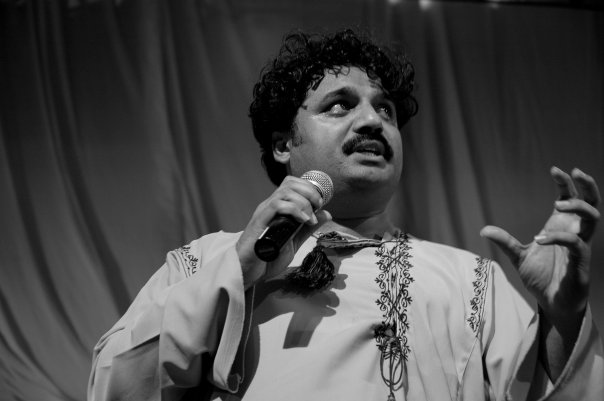 Ms Pamment said the conference would be attended by renowned academics including Dr Kathy Foley (US), Brahma Prakash (Taiwan), Syed Jamil Ahmed (Bangladesh) and Ahmed Saleem. The participants would explore theatre practice in Pakistan.
 She said the production design and decor of the event had been conceptualised by leading sculptor, painter and actor Jamal Shah while popular folk singers Babar and Javed Niazi were organizers of the programme. Renowned plauwright, poet and director Sarmad Sehbai is the artistic director for the programme.
Subscribe to:
Posts (Atom)